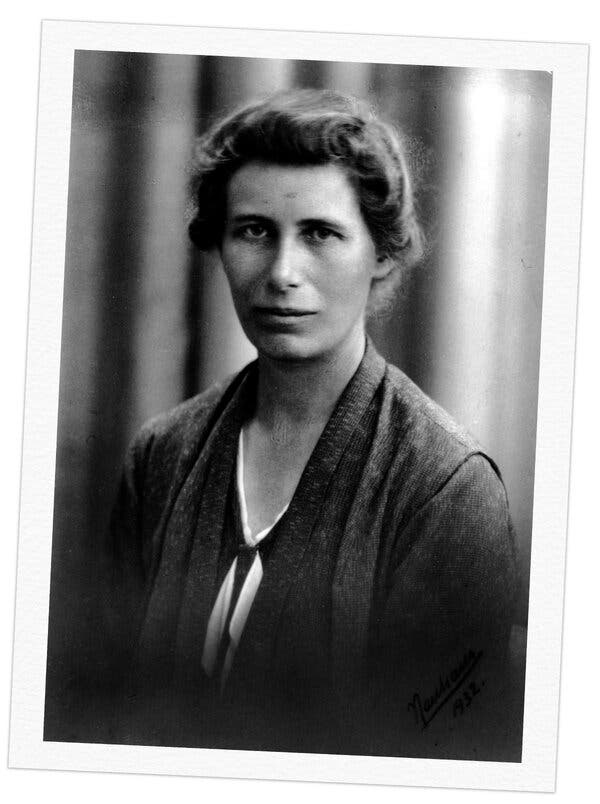
In September 1936, Danish scientist Inge Lehmann made a groundbreaking contribution to the field of seismology by proposing a theory that fundamentally altered the understanding of the Earth’s structure. In her article titled “P’,” published in a French scientific journal, Lehmann introduced the concept of a solid inner core, challenging the prevailing belief that the Earth’s interior was entirely molten.
Revolutionizing Seismology
During the early 20th century, the field of seismology was largely dominated by male scientists, and Lehmann stood out as a notable exception. Choosing to prioritize her scientific career over traditional expectations, she conducted her research primarily in Copenhagen. Her findings emerged from meticulous analysis of seismic data collected from a 1929 earthquake in New Zealand.
Lehmann’s extensive study involved nearly 30 pages of detailed calculations, tables, and hand-drawn graphs. Her observations revealed an unexpected behavior of seismic waves, specifically the primary (P) waves and secondary (S) waves. P waves, which can travel through solids, liquids, and gases, demonstrated characteristics that suggested a more complex internal structure than previously understood.
Prior to Lehmann’s work, the scientific consensus held that the Earth was composed of a molten core; however, her analysis indicated the presence of a dense, solid inner core. This revelation shifted the paradigm in Earth sciences and sparked further investigation into the planet’s internal composition.
The Legacy of Inge Lehmann
Lehmann’s research opened new avenues for understanding the dynamics of the Earth’s interior. Her pioneering work on seismic waves not only led to a better grasp of geological phenomena but also laid the groundwork for future explorations in seismology.
Though her contributions were not widely recognized at the time, Lehmann’s impact on the field has become increasingly acknowledged in recent years. Her ability to combine rigorous scientific analysis with innovative thinking has established her as a key figure in the history of Earth science.
Inge Lehmann’s legacy highlights the importance of diversity in scientific research and the significant advancements that can arise from the contributions of those who defy conventional expectations. Her work continues to inspire new generations of scientists, reminding us of the critical role that women have played in advancing knowledge across various disciplines.