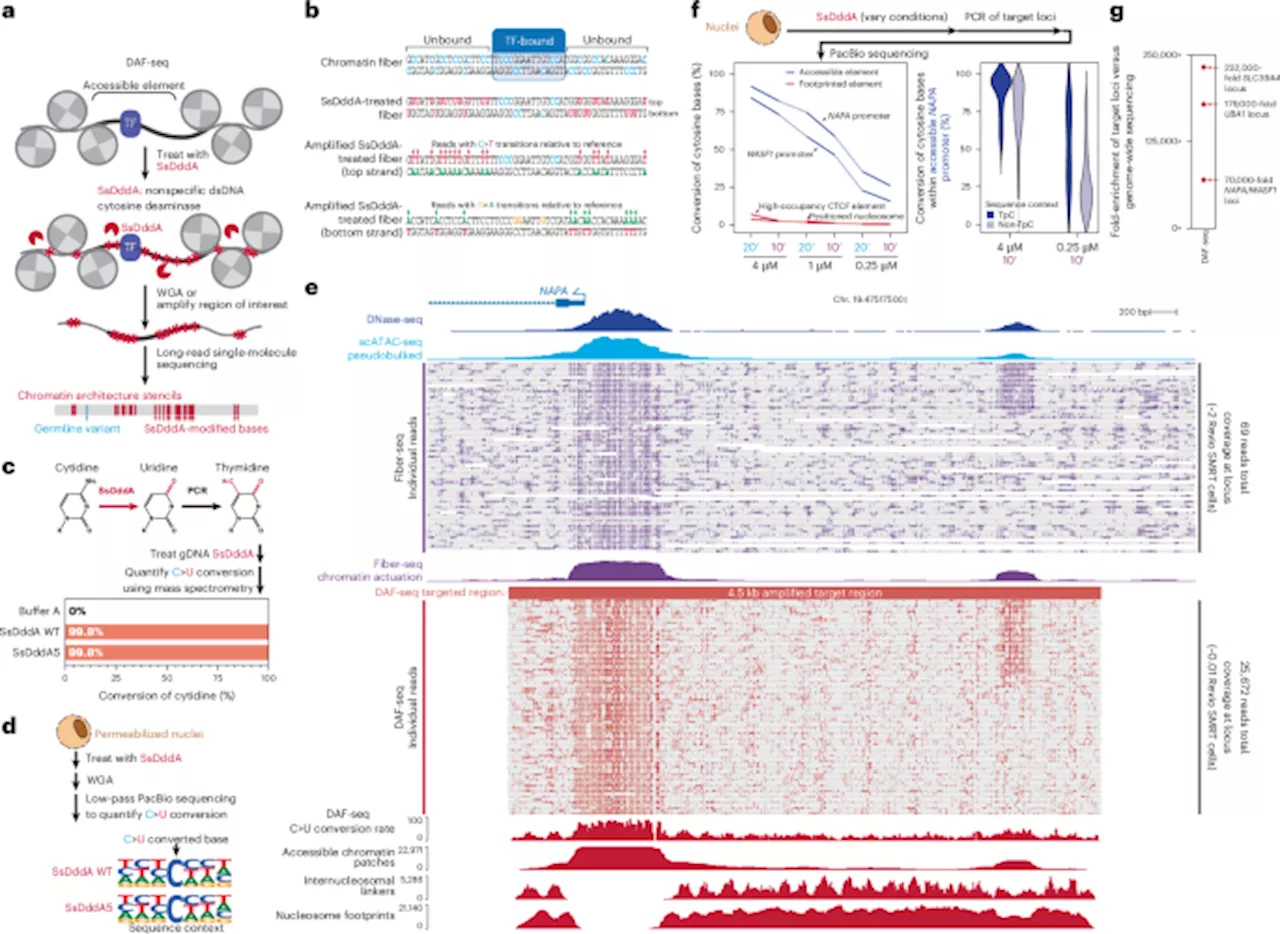
Researchers have developed a groundbreaking technique called Deaminase-Assisted single-molecule chromatin Fiber sequencing, or DAF-seq, which provides unprecedented insights into the chromatin architecture of single cells. This advancement allows scientists to map protein occupancy on chromosome-length chromatin fibers, shedding light on the complex regulation of gene expression in diploid organisms.
DAF-seq enables researchers to achieve single-molecule footprinting at nearly nucleotide resolution. This innovative approach captures the cooperative binding of proteins at individual regulatory elements and identifies the functional implications of somatic variants and rare chromatin epialleles. The technology generates detailed chromosome-length maps of protein co-occupancy, covering approximately 99% of each individual cell’s mappable genome.
The study highlights significant findings regarding chromatin plasticity within and between diploid cells. It reveals that chromatin actuation diverges by 61% between haplotypes within a single cell and by 63% between different cells. This level of detail enhances our understanding of how regulatory elements are preferentially co-activated along the same chromatin fiber in a distance-dependent manner, reflecting the behavior of cohesin-mediated loops.
Implications for Gene Regulation Studies
The implications of DAF-seq extend beyond basic research. By illuminating the cooperative nature of protein occupancy at regulatory sites, this method provides a framework for understanding how genetic variations contribute to diverse cellular functions and disease states. The ability to characterize protein occupancy with single-nucleotide precision opens new avenues for exploring gene regulation mechanisms in health and disease.
The research team, which includes scientists from the University of Washington and Washington University in St. Louis, emphasizes the importance of this advancement in the broader context of genomic studies. The work was supported by substantial funding from the National Institutes of Health and the Chan Zuckerberg Initiative, among other organizations.
Significant contributions to the development of DAF-seq came from various researchers, including A.B. Stergachis, who led the study and manuscript preparation, and E.G. Stamatoyannopoulos, who directed the experimental workflows and data analysis. The collaborative nature of the project reflects the interdisciplinary efforts required to tackle complex questions in genomics.
Future Directions and Applications
Looking ahead, the DAF-seq technique could play a crucial role in advancing our understanding of epigenetics and chromatin biology. Researchers anticipate its application in studies related to gene therapy, cancer research, and personalized medicine. By providing insights into how chromatin structure influences gene regulation, DAF-seq holds promise for the development of targeted therapies that leverage this knowledge.
As the field of genomics continues to evolve, technologies like DAF-seq will be instrumental in deciphering the intricate regulatory networks that govern cellular behavior. The potential for clinical applications reinforces the importance of continued investment and research in this area, as scientists strive to translate their findings into meaningful health outcomes.
In summary, DAF-seq represents a significant leap forward in our ability to explore the complexities of chromatin architecture at an unprecedented level of detail. As researchers delve deeper into the implications of this technique, it is poised to reshape our understanding of gene regulation in diploid organisms and beyond.