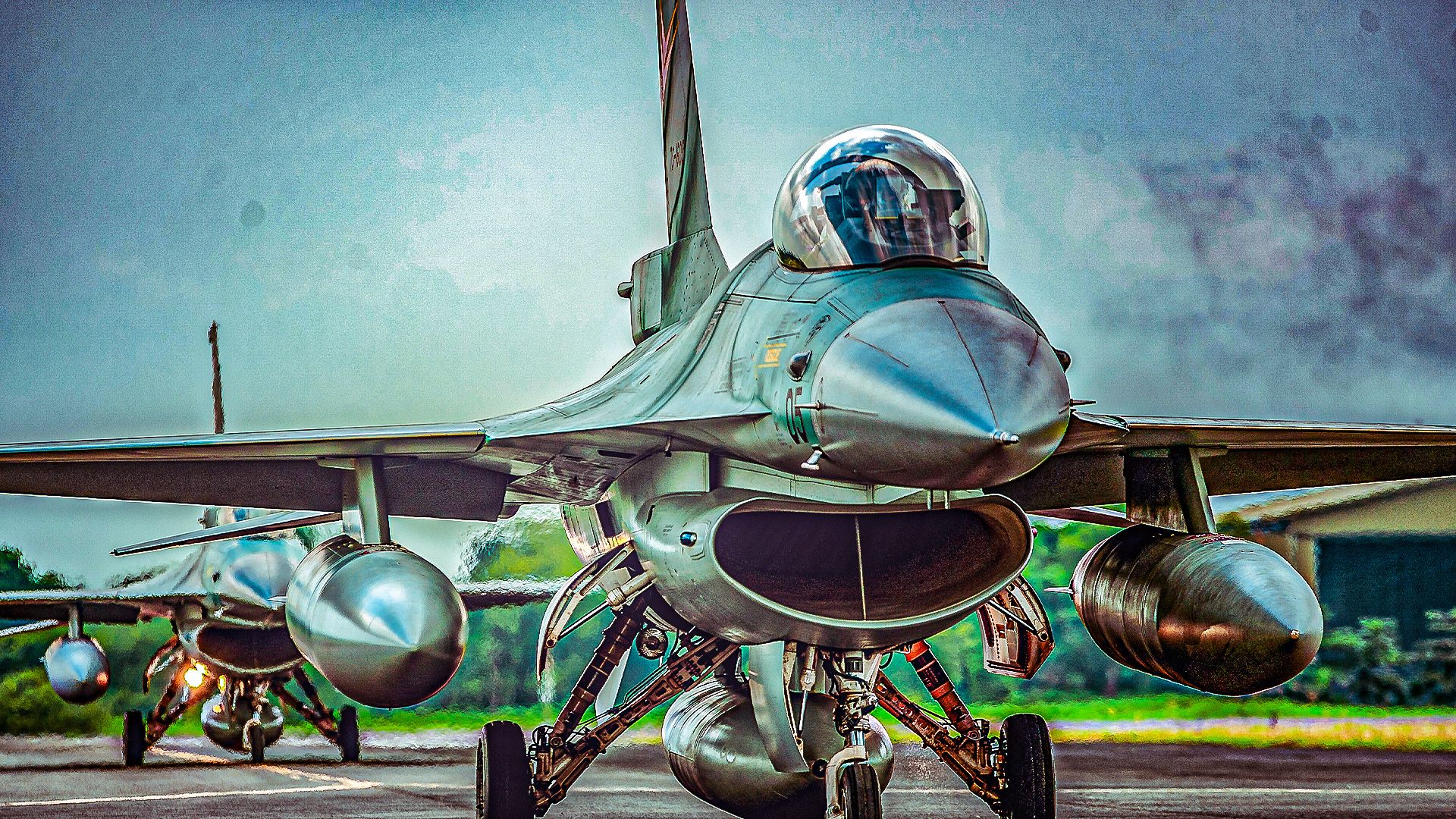
The United States Air Force (USAF) oversees a vast network of military installations that play a crucial role in global air power and operational support. Among various metrics to assess these bases, one of the most straightforward is the number of aircraft stationed at each facility. While exact figures are often classified for security reasons, estimates can provide insight into the capacity of these installations. Excluding the ‘Boneyard’ at Davis-Monthan Air Force Base, where decommissioned aircraft are stored, here are five of the largest USAF bases based on aircraft capacity.
Eglin Air Force Base: A Hub for Testing and Training
Eglin Air Force Base in Florida ranks as one of the largest bases, housing over 90 aircraft. This facility is renowned for its extensive testing and training capabilities. It features numerous large ranges designed for weapons testing, making it integral to the USAF’s operations. The base hosts various units, including the 96th Test Wing, which conducts primary weapons testing, and the 33rd Fighter Wing, dedicated to training pilots and maintainers for the Lockheed Martin F-35 Lightning.
Historically a gunnery range, Eglin has transformed into the primary center for developing and testing aerial weaponry used by the USAF since World War II. Its vast land and sea range allows for large-scale live-fire testing that is not feasible at many other installations.
Kadena Air Base: Strategic Presence in the Pacific
Located in Okinawa, Japan, Kadena Air Base is the largest and most active USAF installation in Asia, also boasting over 90 aircraft. Known as the ‘Keystone of the Pacific,’ Kadena plays a vital role in the USAF’s air defense strategy. The base is currently transitioning its fleet, retiring older F-15C/D Eagles while integrating newer models like the F-15E, F-15EX, and F-35.
Kadena’s strategic location is critical for countering threats from regional powers such as North Korea and China. Originally established as a small Japanese airfield during World War II, it has since evolved to serve as a major hub for military operations in the Pacific.
Joint Base Elmendorf-Richardson: A Critical Arctic Platform
Joint Base Elmendorf-Richardson (JBER) in Alaska is another significant installation, operating over 100 aircraft. Established through the merger of Elmendorf Air Force Base and Fort Richardson in 2010, JBER serves as a vital power projection platform for both Arctic and Indo-Pacific operations.
The base is home to the active-duty 3rd Wing and the Air National Guard’s 176th Wing. The fleet primarily consists of fifth-generation Lockheed Martin F-22 Raptors and various support aircraft, including Boeing C-17 Globemaster IIIs for rapid airlift operations. JBER’s strategic location enhances the USAF’s capability to respond to emerging global threats.
Little Rock Air Force Base: Center of Tactical Airlift
Located in Jacksonville, Arkansas, Little Rock Air Force Base is pivotal for global combat airlift missions, usually housing over 100 C-130 Hercules transport aircraft. Dubbed the ‘Home of Herk Nation,’ the base functions as the Department of Defense’s Center of Excellence for tactical airlift, training aircrews from various military branches.
With a storied history dating back to its opening in 1955, Little Rock has shifted its focus exclusively to the C-130 since 1970. It also operates the largest international flight training program, collaborating with 47 allied nations to enhance global tactical airlift capabilities.
Luke Air Force Base: Leading Fighter Pilot Training
Luke Air Force Base in Arizona stands out as the USAF’s largest fighter wing, operating at least 150 aircraft. It is a premier training facility for combat-ready pilots, particularly for the F-35 and F-16 fighter jets. The base is recognized as one of the most significant hubs for F-35 operations within the Air Force.
In June 2023, Luke celebrated a milestone with the graduation of its 1,500th F-35 pilot, reflecting its critical role in pilot training. Luke’s history began in 1940 and has evolved to become the largest fighter pilot training base, transitioning from older aircraft models to the cutting-edge F-35.
These five installations exemplify the USAF’s commitment to maintaining a robust air power infrastructure capable of supporting a wide array of military operations globally. Each base plays a unique role in ensuring the readiness and effectiveness of the United States’ air capabilities.