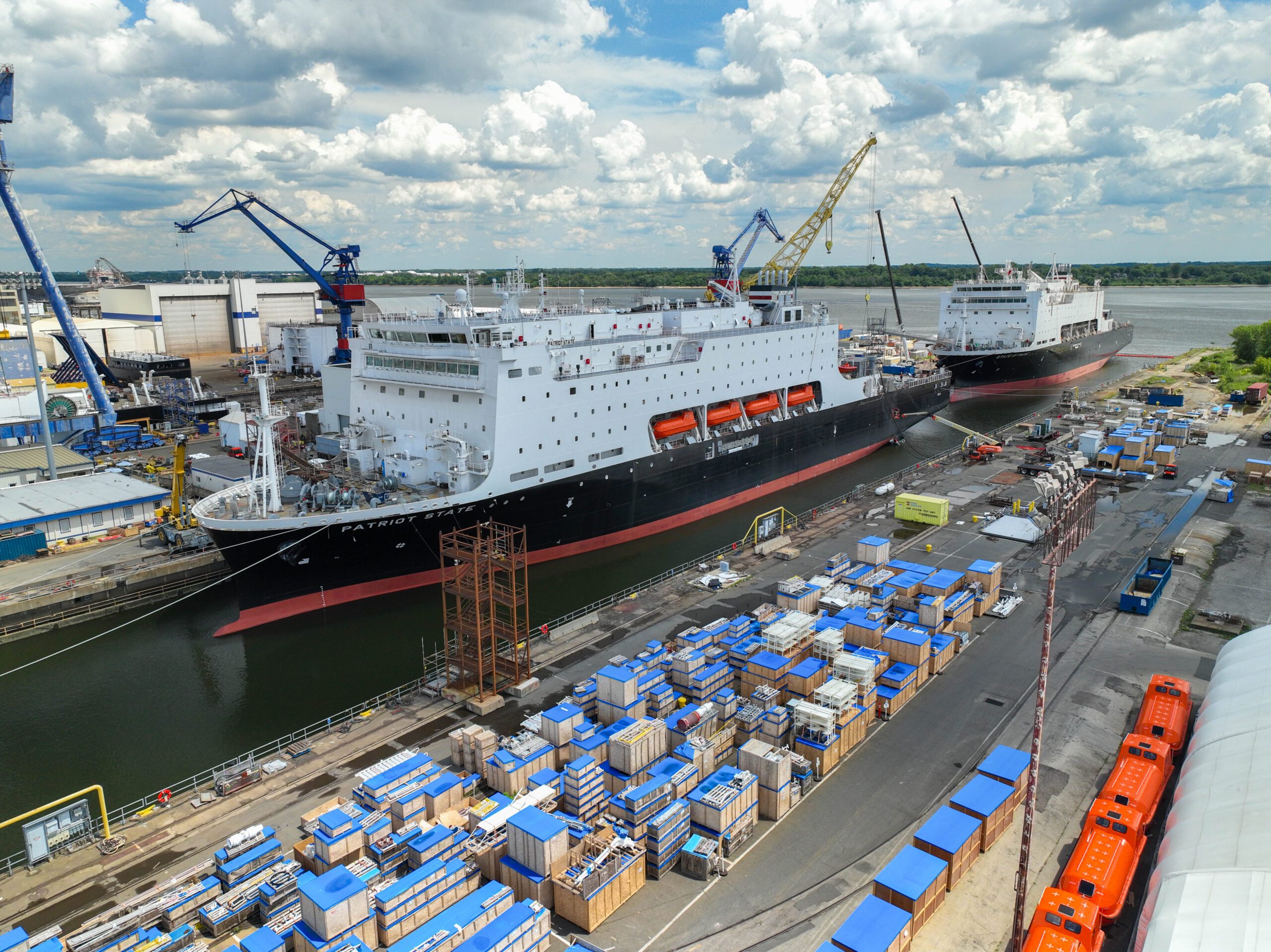
The United States is poised for a significant transformation in its shipbuilding industry, aiming to learn from the advanced practices of South Korea. Recent data from the 2024 Clarksons Global Shipbuilding Review highlights the growing dominance of Asian countries, particularly South Korea and China, in commercial shipbuilding. In 2023, South Korea’s shipyard output rose by 22%, capturing a 28% market share by compensated gross tonnage. Meanwhile, China saw an 18% increase, commanding a substantial 53% market share.
In response, the U.S. is implementing strategic policies to enhance its own shipbuilding capabilities. One significant initiative is the proposed Shipbuilding and Harbor Infrastructure for Prosperity and Security (SHIPS) for America Act, which currently enjoys bipartisan support in Congress. Additionally, an executive order titled “Restoring America’s Maritime Dominance” was signed by President Trump, mandating a comprehensive Maritime Action Plan scheduled for completion by November 5, 2023. This directive aims to bolster the maritime industrial base, focusing on shipbuilding, repair, and workforce development.
Collaboration with South Korea is a vital aspect of this initiative. During President Trump’s recent visit to South Korea, the country pledged to invest 150 billion USD in U.S. shipbuilding projects. HD Hyundai Heavy Industries has already begun a partnership with Huntington Ingalls Industries to manufacture auxiliary ships for the U.S. Navy, with plans to deepen its involvement in the U.S. market.
Understanding South Korea’s Success
South Korea’s shipbuilding sector is characterized by high-tech production and efficiency. Major shipyards such as HD Hyundai Heavy Industries, Hanwha Ocean, and Samsung Heavy Industries have earned international acclaim for their innovative designs and large-scale manufacturing capabilities. U.S. officials have expressed admiration for the digitalization and operational efficiency observed in Korean shipyards.
This success can be attributed to a long-standing collaboration with global partners and significant investments in digital technology. South Korean shipbuilders have consistently adopted and refined best practices within the industry, integrating advanced technologies into their operations. The shift towards creating a ‘digital shipyard’ is central to this transformation, where the use of digital 3D workflows and digital twins enhances the design and construction processes.
The concept of digital continuity allows shipyards to leverage existing data more effectively. By enabling multiple teams to collaborate on shared 3D models, shipbuilders can streamline workflows, reduce errors, and achieve quicker design iterations. This efficiency not only lowers costs but also enhances the quality of outputs, particularly in large and complex projects.
Addressing Workforce Challenges
The saying “work smarter, not harder” resonates strongly for the U.S. shipbuilding industry, particularly in light of a shortage of trained maritime professionals. Following a downturn in 2014, South Korea faced significant workforce challenges, reducing its shipbuilding workforce from approximately 203,000 to about 92,000. This issue has resurfaced as newbuilding activities resumed post-COVID-19.
Digital technologies hold promise in addressing recruitment and efficiency challenges. By automating repetitive tasks, these innovations can enhance productivity among engineers and naval architects. Furthermore, modernizing the sector may attract younger individuals seeking careers in shipbuilding, particularly as artificial intelligence continues to evolve.
The Importance of a Revitalized Shipbuilding Industry
Revitalizing the U.S. shipbuilding industry is crucial for multiple reasons, including job creation, economic growth, national security, and trade policy. With a determined approach, the U.S. can leverage the successful strategies employed by South Korea, a key ally and leader in shipbuilding.
The path forward involves adopting and refining the concept of a digital shipyard. By prioritizing data utilization and 3D modeling, U.S. shipyards can foster real-time collaboration and innovation, leading to enhanced efficiency. Learning from South Korea’s experience will enable the U.S. to accelerate its shipbuilding renaissance, delivering projects on time, within budget, and at scale.