An international team of researchers led by Cornell University has made significant strides in understanding how the psychedelic compound psilocybin can affect brain connectivity. Their study, published on December 5, 2023, in the journal Cell, reveals that psilocybin may weaken negative thought patterns in the brain and enhance sensory-motor responses, providing insights into potential treatments for depression.
The research, spearheaded by Quan Jiang, a postdoctoral researcher, and senior author Alex Kwan, a professor of biomedical engineering at Cornell, combines psilocybin with a modified variant of the rabies virus. This innovative approach allows the team to map the intricate neural connections that psilocybin influences, shedding light on its therapeutic potential.
Kwan’s lab has been at the forefront of exploring how various psychiatric drugs, including psilocybin, can rewire the brain’s circuitry. Previous findings indicated that a single dose of psilocybin could induce structural changes in the brain, promoting the growth of dendritic spines that lead to new synaptic connections. Kwan expressed excitement about the implications of their work, noting that while psychedelics show promise as treatments, the mechanisms behind their efficacy remain unclear.
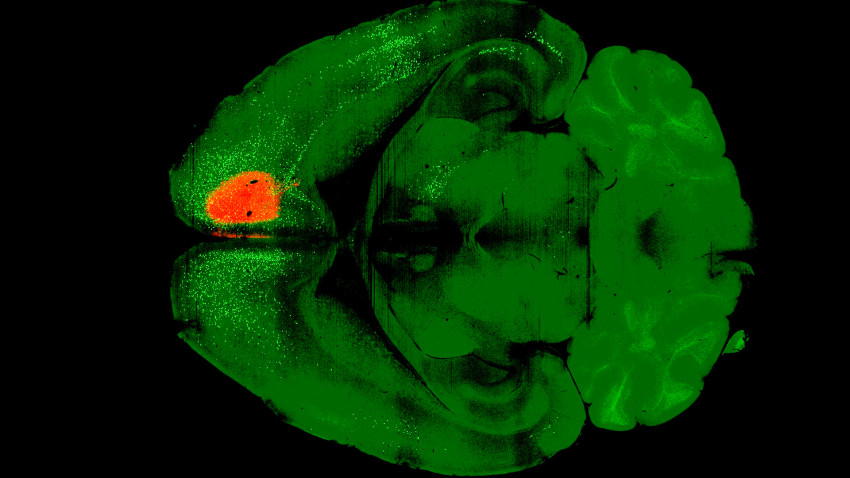
To address this gap, the researchers injected a dose of psilocybin into the frontal cortical pyramidal neurons of mice. A day later, they introduced a variant of the rabies virus designed to connect and label neurons with fluorescent proteins. After allowing a week for the virus to incubate, the team compared the brain images of treated mice with those of a control group that received only the virus. This method revealed that psilocybin diminished recurrent connections in the cortex, which are thought to contribute to negative thinking in individuals with depression.
Kwan explained, “Rumination is one of the main points for depression, where people have this unhealthy focus and they keep dwelling on the same negative thoughts. By reducing some of these feedback loops, our findings support the idea that psilocybin may help break or weaken that cycle.”
Additionally, the research indicated that psilocybin strengthens connections between sensory areas of the brain and subcortical regions, thereby enhancing the relationship between perception and action. Kwan noted that he was surprised to find that the rewiring effects of psilocybin extended across the entire brain, rather than being limited to specific areas.
The study also highlighted the role of neuronal firing activity in determining how psilocybin rewires brain circuitry. By manipulating the neural activity in one region, the researchers were able to alter the effects of psilocybin, suggesting new avenues for therapeutic development. “This opens up many possibilities for therapeutics, how you maybe avoid some of the plasticity that’s negative and then enhance specifically those that are positive,” Kwan stated.
Co-authors of the study include several researchers from Cornell, Yale University, and the Allen Institute for Brain Science in Seattle, among others. The project was funded by One Mind and the National Institutes of Health, reflecting a broad commitment to exploring innovative treatments for mental health issues.
As research continues, the findings may pave the way for the development of new therapies that leverage the brain’s plasticity, offering hope to those suffering from depression and related disorders.