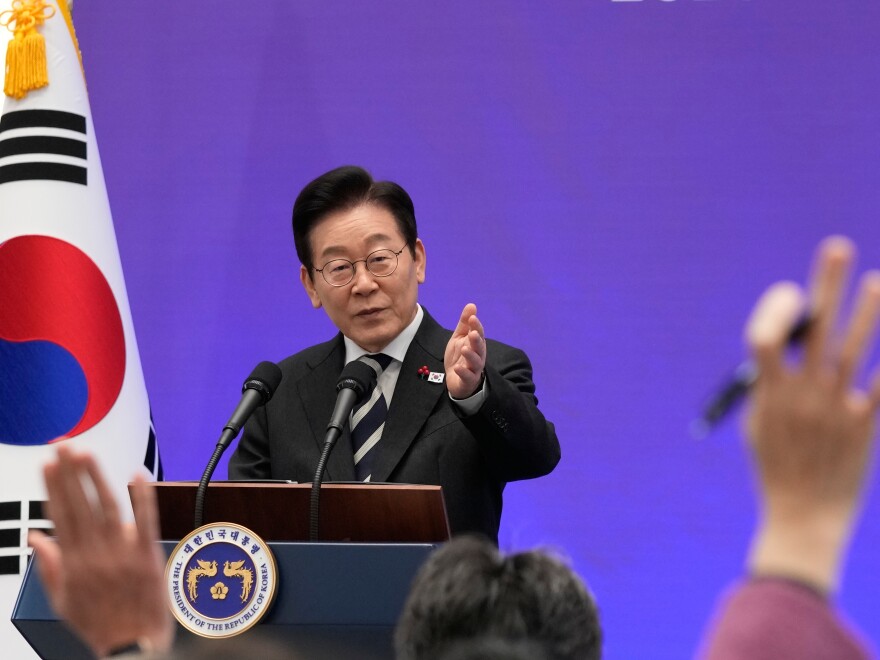
One year after an attempted power grab that threatened South Korea’s democracy, President Lee Jae Myung commended the citizens for their pivotal role in upholding democratic values. In a press conference on Wednesday, he emphasized the public’s resilience in the face of former President Yoon Suk Yeol‘s declaration of martial law, which sparked widespread protests and a significant political backlash.
In July 2023, thousands of South Koreans gathered around the National Assembly to oppose Yoon’s martial law declaration, which he justified by accusing the opposition of engaging in a “legislative dictatorship.” The situation escalated when troops were deployed to the Assembly and decrees were issued to prohibit political activities. However, the parliament swiftly voted against the martial law, leading to its retraction just six hours after it was announced.
Consequences for Yoon and his Administration
In the wake of the crisis, law enforcement launched investigations into Yoon on insurrection charges. He became the first sitting president in South Korea to be arrested, with the National Assembly voting to impeach him on December 14, 2024, with support even from members of his own party. The Constitutional Court upheld the impeachment in a unanimous decision in April 2025. Yoon is now facing multiple indictments, including charges of masterminding an insurrection and attempting treason.
Allegations have emerged that Yoon attempted to provoke North Korea by sending drones into Pyongyang in October 2024, purportedly to justify his martial law declaration. Alongside Yoon, numerous military commanders and key government officials, including his defense and interior ministers, have been indicted for their roles in the alleged insurrection. Trials for these officials are ongoing, with the verdict for Han Duck-soo, the former Prime Minister, expected on January 21, 2026.
Reforms and Shifts in Political Landscape
In response to the crisis, the National Assembly enacted reforms in July 2024, tightening the requirements for declaring martial law and enhancing protections for parliamentary integrity. New regulations stipulate that military and police forces cannot enter the parliamentary compound without the Speaker’s consent, even under martial law. Proposed bills also aim to empower public servants, including military personnel, to disobey unlawful orders.
Ahn Gyu-back, appointed as the first civilian defense minister in 64 years, has initiated a significant reshuffling of military leadership and mandated internal audits for units involved in the crisis. President Lee’s administration is also conducting a comprehensive investigation into officials who aided in the enforcement of martial law.
The political landscape is shifting as public sentiment fluctuates. Recent polls indicate a resurgence in public confidence in national institutions, yet the divisions within South Korean society have deepened. A recent survey revealed that 77% of respondents believe political polarization has increased since the martial law incident. The People Power Party (PPP), now in opposition, faces internal conflict regarding whether to apologize for Yoon’s actions, with some members advocating for reconciliation while others cling to support for the former president.
During the press conference, Lee acknowledged the complexity of navigating accountability and national unity. He stated, “The intention is not to mercilessly punish the perpetrators. But we can’t sweep them under the rug.” His administration aims to foster unity while also addressing the ramifications of the crisis.
The implications of the martial law crisis extend beyond South Korea’s borders, impacting its global reputation. The incident has raised concerns about the stability of South Korea as a model democracy, particularly in light of the Biden administration’s investment in Yoon as a key ally. Allegations of provocations against North Korea have further strained the US-South Korea alliance, with potential risks to American troops stationed in the region.
As South Korea reflects on the past year, President Lee expressed hope that the country’s experience could serve as “a historic example for the restoration of democracy” worldwide. The path forward, however, will depend on the government’s ability to prevent further political turmoil and uphold democratic principles.